Multi-channel vs Omnichannel: What’s the difference?
Customers don’t experience your brand in channels. They experience it as one long conversation.
Picture this: someone sees your brand on Instagram at lunch. They click around for a minute, get distracted, forget about you, and then eight hours later Google you while half-asleep on the couch. The next morning they’re served a YouTube preroll, and that same afternoon a postcard lands in their mailbox. If all four touchpoints feel like four different companies with four different messages, you didn’t nurture them. You confused them.
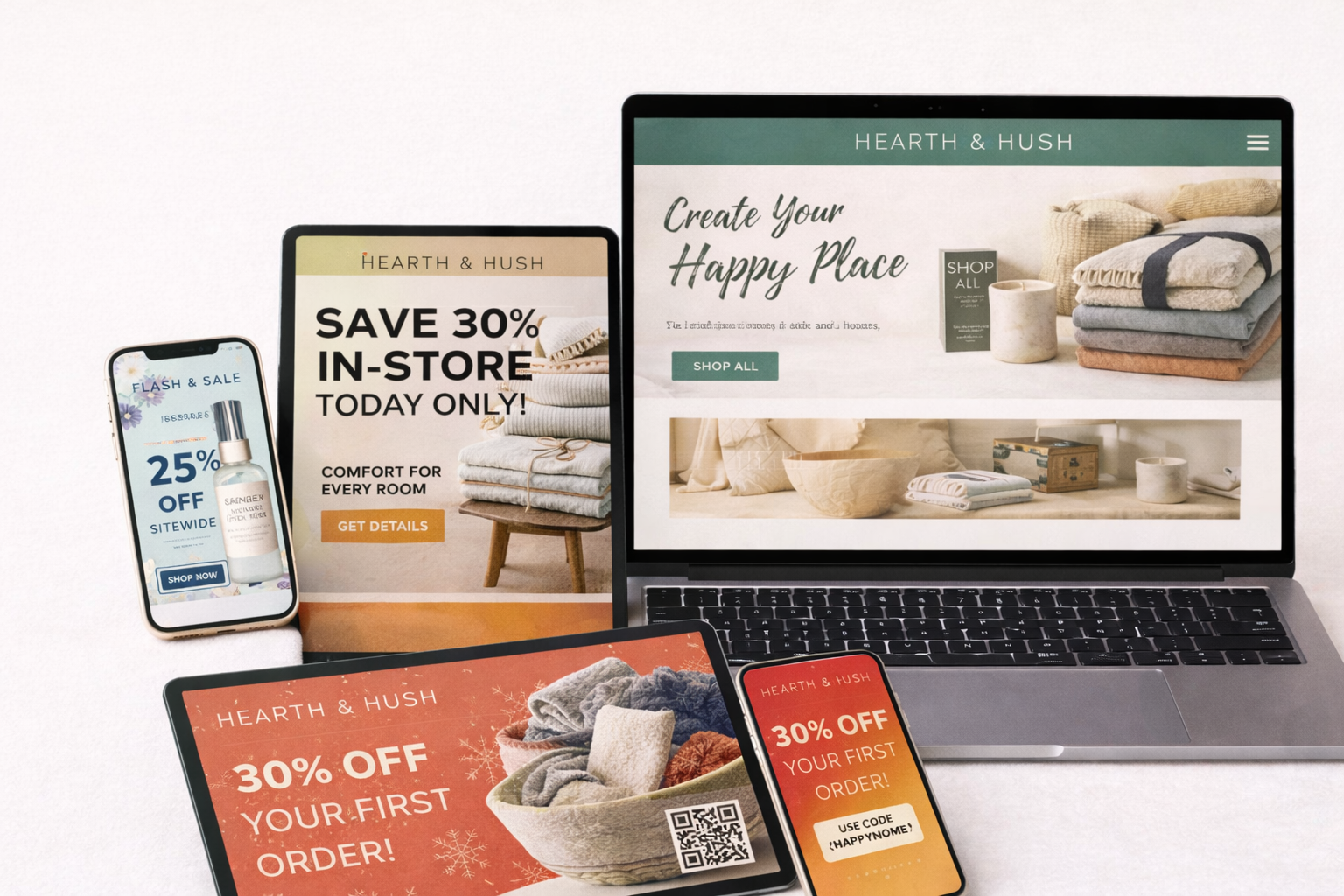
This is the part where I’m supposed to say “today’s consumer expects consistency,” which is true, but honestly it’s simpler than that. People don’t think, “Wow, what a fragmented multi-channel environment.” They just think, “What am I even looking at?”
Marketing teams love funnels. Real buying behavior looks more like a Roomba bouncing from wall to wall.
Multi-channel isn’t omnichannel
This is an important distinction. A brand posting everywhere is multi-channel.
A brand making everywhere feel like the same experience is omnichannel.
Those are not the same skill set. The first is coverage. The second is continuity.
All champagne is wine, but not all wine is champagne.
In that same way, all omnichannel is multichannel, but not all multichannel is omnichannel.
A quick story from the real world
A few months ago I walked into a store that had a “New Members Save 30%” sign at the door. At checkout the clerk said “That’s online only.” Online said “In-store only.” The email I received the next day had a different percentage entirely. At no point did I feel nurtured. I just felt like I needed a lawyer.
The business didn’t have a marketing problem. It had a coherence problem.
What good looks like: The Amen House campaign
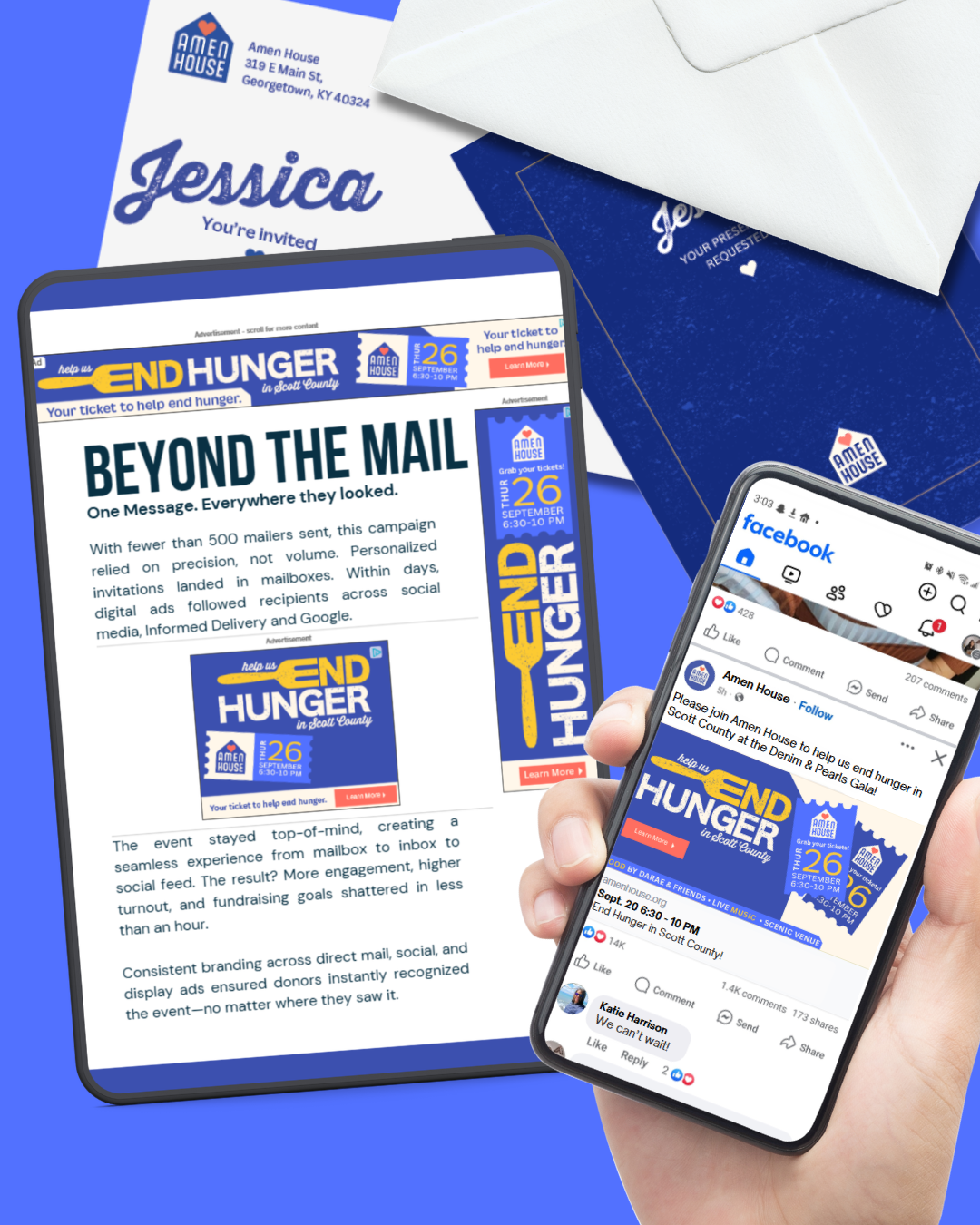
Amen House is a small non-profit in Georgetown, KY with a straightforward goal: fill an event and drive donations. Instead of betting on one channel, we helped to build a journey people could actually follow.
Moves we stacked:
• Local media for awareness
• Social content to build emotional connection
• Email to create urgency
• Digital advertising for increased exposure
• Direct mail with RSVP form for physical reinforcement
• On-site signage to tie the whole narrative together
No channel lived alone. Digital ads teased what mail delivered. Email confirmed what signage reinforced. The story built layer by layer instead of resetting at each touchpoint.
Result: Full house and eighty thousand dollars raised in the first hour.
The mistake most brands make
They optimize channels instead of optimizing the journey.
Social wants engagement. Email wants open rates. Paid wants conversions. Print wants QR scans. Sales wants closed deals. None of those KPIs are wrong, but they all become meaningless if the customer has to reintroduce themselves at every step.
How to tell when you don’t have omnichannel yet
If any of these feel familiar, you’re still in multi-channel land:
• Customers ask, “Is this the same promotion” more than once
• Sales hears about campaigns at the same time the public does
• Your postcard and landing page look like they are from different companies
• Data lives in five separate tools with no synthetization
• Every department has its own definition of “success”
If marketing is a group project where everyone is graded individually, omnichannel is impossible.
What good omnichannel actually requires
Here’s the unsexy truth: omnichannel is 80 percent alignment and 20 percent creative.
Most of the work happens before launch:
- Map the journey people actually take, not the one in the deck.
- Decide what message belongs at what moment in the journey.
- Make every touchpoint build on the previous one instead of resetting.
- Resist the urge to change the strategy or messaging when results aren’t instant.
- Use data wisely (Stop blasting the same offer to someone who already converted.)
- Audit every quarter because consistency drifts faster than you’d think.
Small detail, big impact:
The fastest omnichannel improvement is making your landing page look like it knows your mailer personally.
Where momentum breaks
Most drop-off doesn’t announce itself. There’s no dramatic unsubscribe, no formal complaint. People just stop moving forward. An ad feels disconnected from the email. The website doesn’t match the offer. A promotion changes halfway through the campaign.
Nothing feels catastrophic. It just feels slightly off, and “slightly off” compounds. By the time it shows up in a report, it’s already expensive.
If your channels are working hard but not working together, that’s usually where to look first. We help brands close that gap. Learn more about how an integrated marketing approach strengthens brand continuity or grab your free ebook on How to Run An Omnichannel Marketing Campaign.
Interested in how Bluegrass can help?
See what we can do.
You may also like...
Why Direct Mail is a Great Prospecting Tool for New Customers
May 1, 2025

The Psychology of Direct Mail: Why it works
December 30, 2024